
— how it works
Removing the spearhead
of the blast.
A blast doesn't strike all at once. It leads with one thing — a wall of pressure moving faster than sound — and that single wave does most of the harm. Shiva Kawach is built around one idea: blunt the edge off the impact, before it causes harm. Here is how that works.
— The threat
A wave that arrives before the blast is even felt.
When a high explosive detonates — buried, beneath a vehicle, or at close standoff — a large part of its energy is thrown off as a shockwave: a steeply rising front of pressure travelling at supersonic speed.
It is the lead energy of the explosion and the part that does the most severe damage, and at close range it reaches the target almost the instant the charge goes off.
Sharp, fast and concentrated — this pressure spike is the spearhead. Fragments, heat and debris all follow behind it.
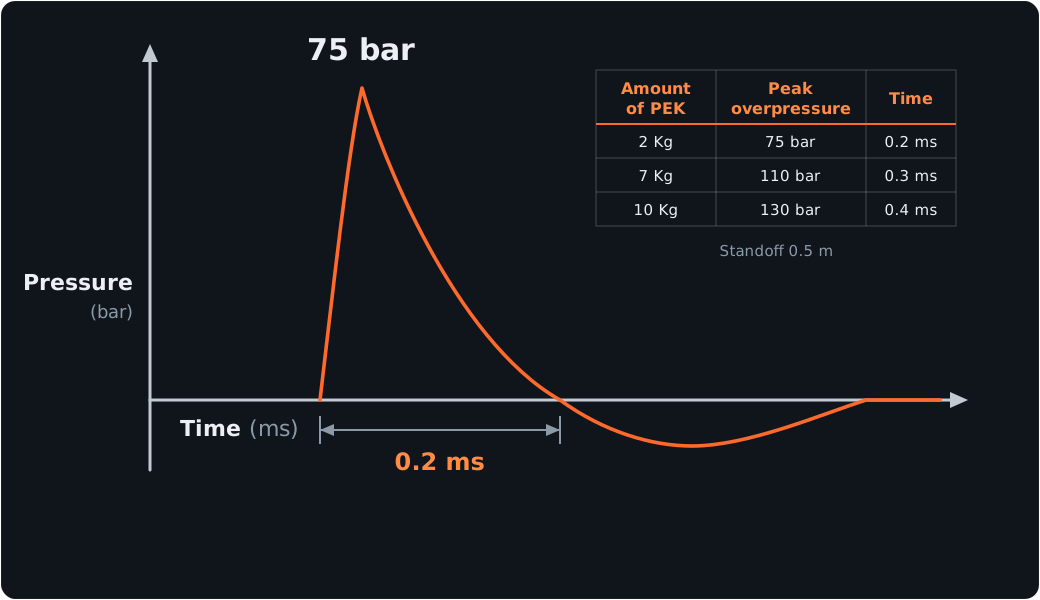
~40%
of a buried charge's energy is released as the shockwave — the supersonic front that outruns any system waiting to react to it. In water 70% of the blast energy is released as shockwave.
— The approach
Shiva Kawach doesn't block the wave. It takes it apart.
Instead of trying to out-muscle the blast with mass, Shiva Kawach acts on the wave itself — and because it is built into the structure, it is already in place the instant the shock arrives. There is nothing to sense or trigger, so there is no lag for the wave to beat.
Reflect & Slow it
As the shock enters, its supersonic speed is bled down — the front loses the very velocity that makes it lethal.
▶
Spread it
The energy is broken up and redistributed across many paths instead of driving straight through in one concentrated hit.
▶
Turn it away
What remains of the wave's momentum is deflected away from whatever sits behind it, and bled off harmlessly.
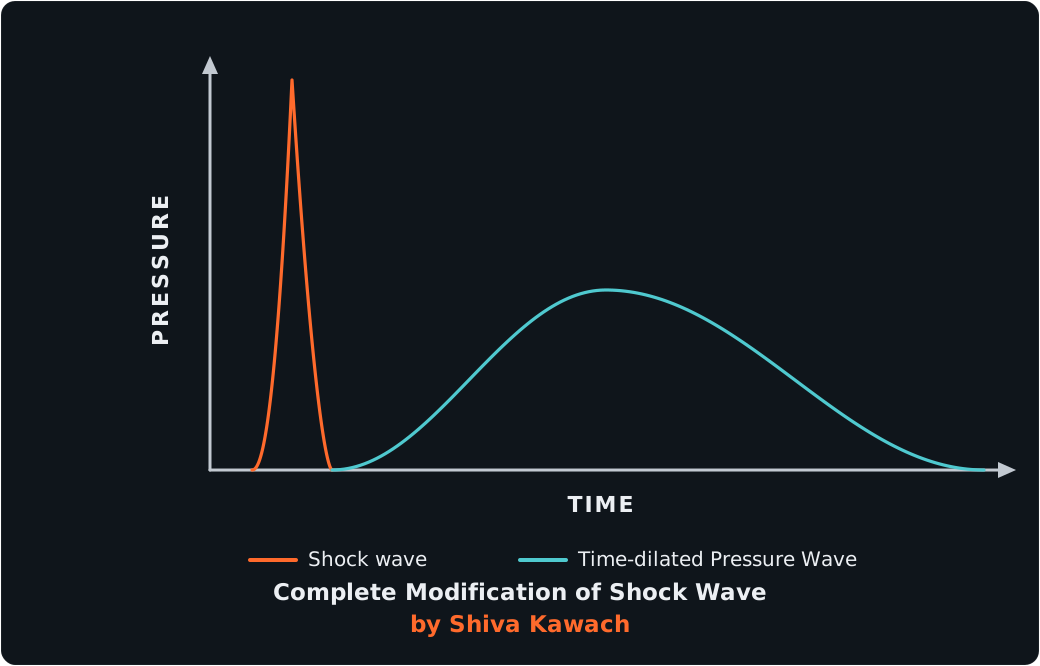
The spearhead, blunted.
Click the arrow ( >) in the image to see the graph
The tall, narrow spike that arrived is flattened into a low, spread-out rise. What reaches the protected side falls below the threshold that injures a person or ruptures a structure — which is why, in real detonations, the living beings on the other side have walked away unharmed.
Because the method works on the wave itself and not on any single material trick, the same principle holds underground, above ground, in air and underwater — at negligible weight and volume.
— Control vs protected
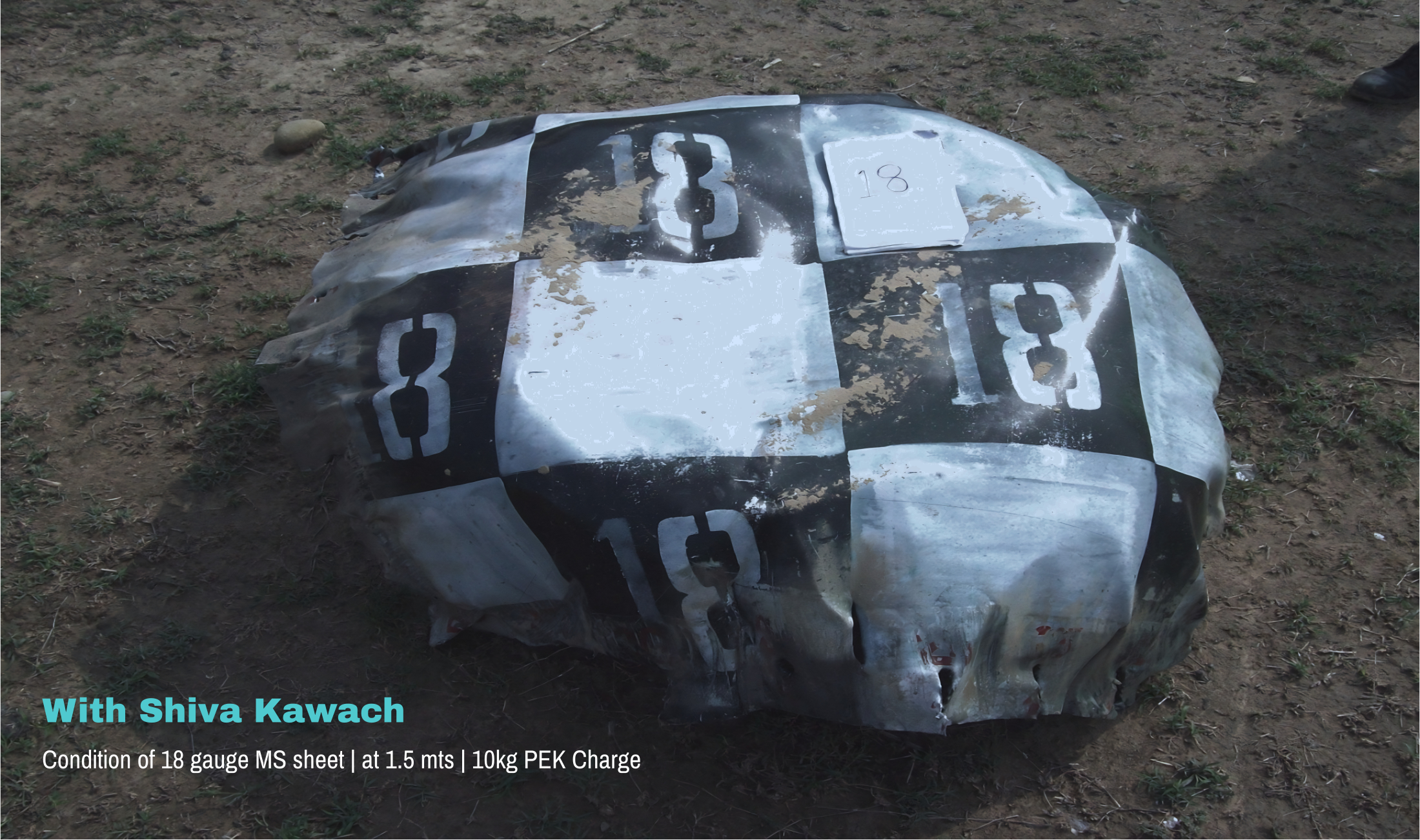
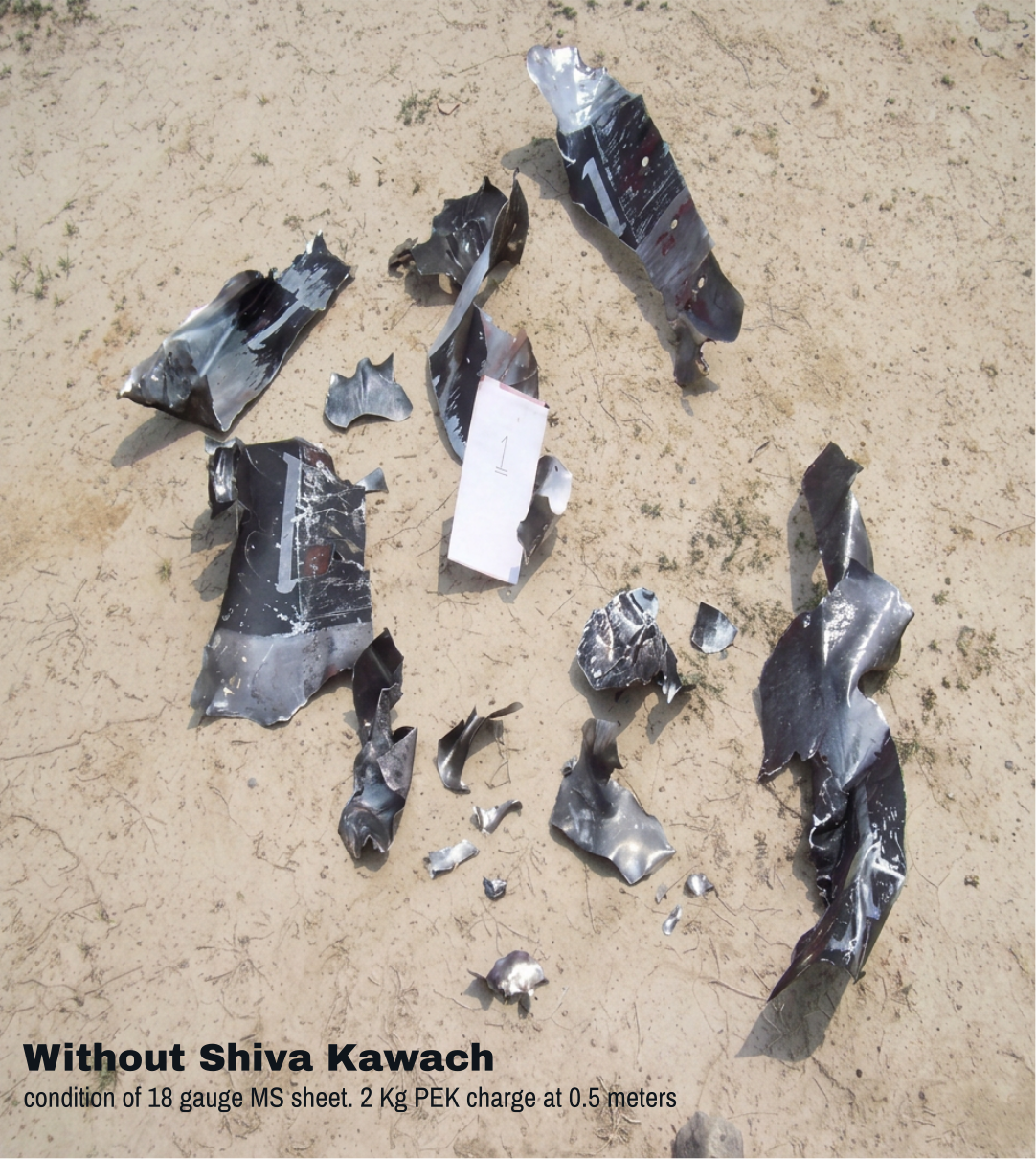
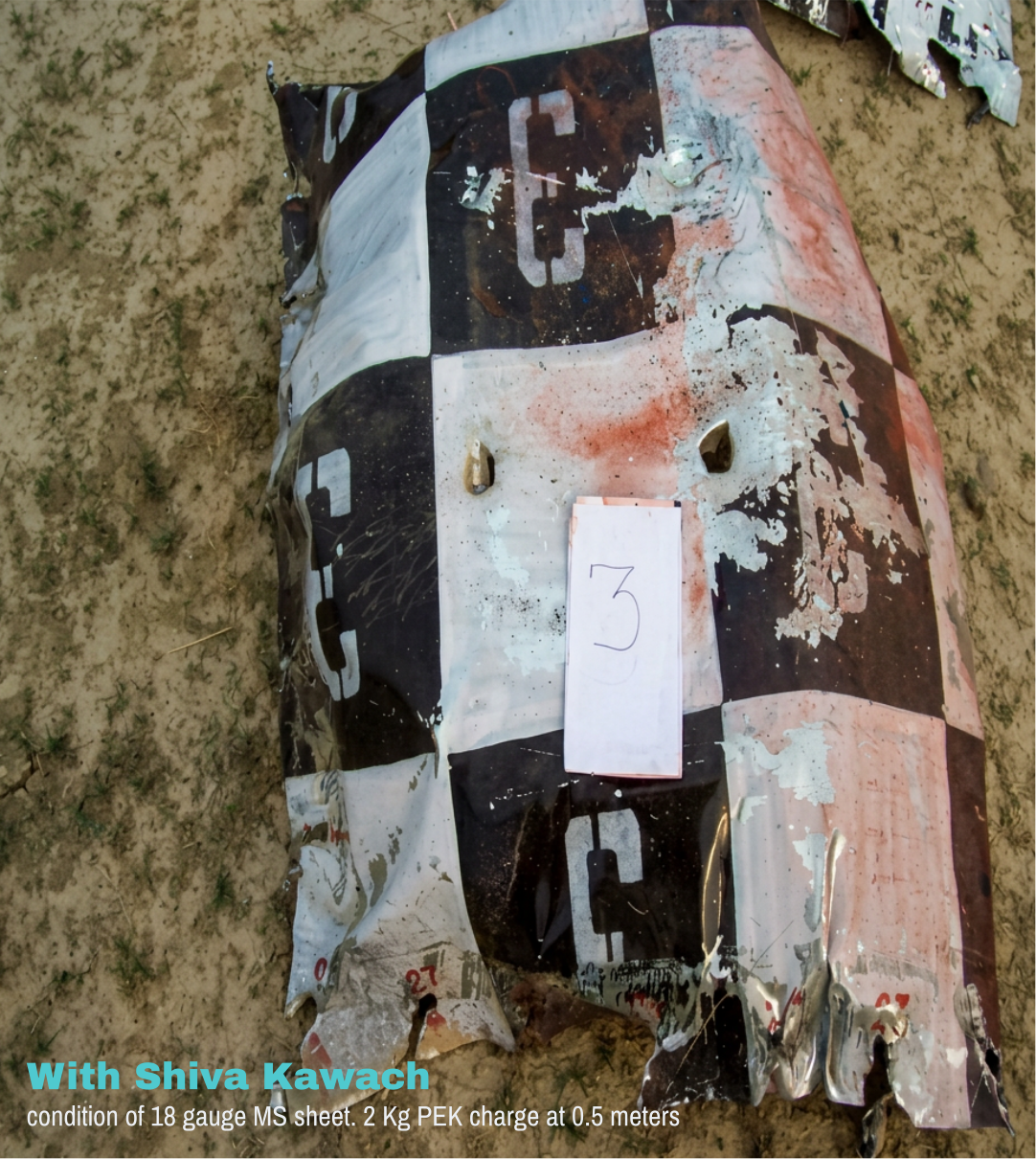
The same charge against a steel plate — with and without.
An 18 guage MS sheet was exposed to a 2 kg PEK blast at 0.5 meters distance — run once unprotected, once with Shiva Kawach, identical charge and standoff.
Proven under live detonation
Tested at blast labs — with a vehicle, a charge, and live subjects aboard.
Shiva Kawach was demonstrated in controlled detonations at govt. blast labs, and testing and certifying establishment.
A standard non-armoured TATA 1212 — the kind of truck that carries soldiers at 1.2 mts above the ground — was fitted with Shiva Kawach.
Live, sedated small animals were placed in the carriage¹ .
A 10 kg TNT charge was set flush with the ground beneath it — detonator at the base, facing up to throw the full blast into the vehicle — to replicate a real under-vehicle IED.
Then it was detonated.
¹ after obtaining all ethical permissions
Facility
Blast Lab
Vehicle
TATA 1212 (MHA)
Charge
10 KG TNT
Stand-off
1.2 mts
Live Subjects
Live sedated small animals
Test Year
2019
Post-blast observations
They didn't just survive. They were unharmed —
and stayed that way.
28 days
No abnormality
The subjects were kept under observation for 28 days after the blast, with no sign of damage or abnormal behaviour.
Afterwards
A healthy litter
A female rabbit from the test later conceived and delivered healthy young — normal function, fully intact.
Imaging
No internal trauma
MRI and X-ray of the subjects showed no internal damage and no post-blast trauma of any kind.
Take it further
See how it applies to your platform.
Bring the inventors your specific case — a vehicle, vessel, aircraft, boot or structure — and they'll walk you through the engineering under NDA.
DETAILED MECHANISM SHARED UNDER NDA · APPLICATION BY APPLICATION
SHIVA KAWACH
by Mercurial Research Technologies
COMPANY
LEGAL
Copyright 2026. All Rights Reserved.